hospital mural
PROJECT STORY
St. andrew’s mental health charity courtyards
August 2024 – october 2025
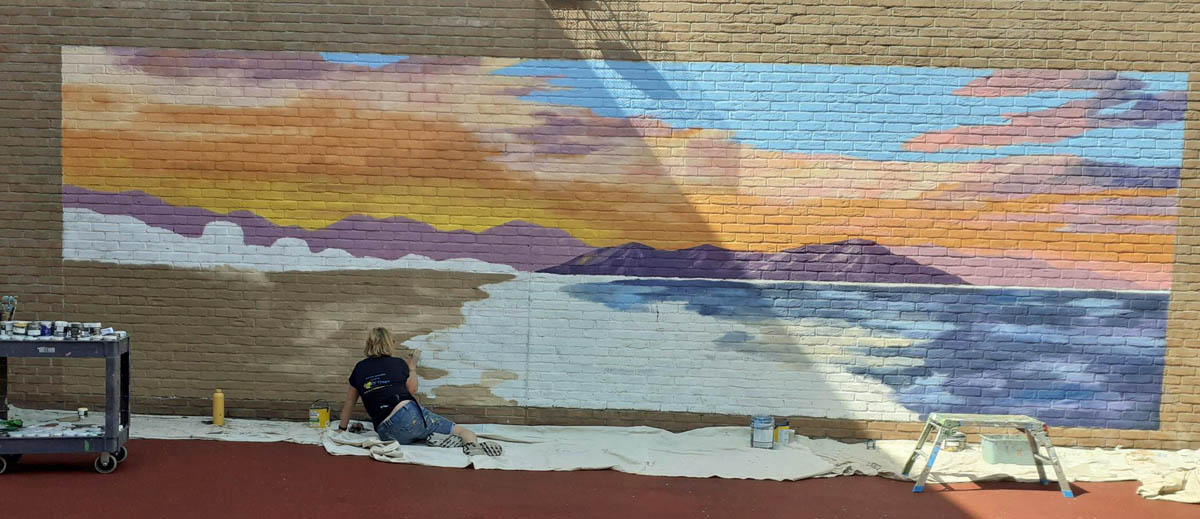
Following the success of previous courtyard murals at St Andrew’s Healthcare in Northampton, I was invited back in 2024 to design artwork for a further nine courtyards across two of the charity’s sites. The project spans wards for both male and female patients, and I’ve had the privilege of working with individuals living with a wide range of conditions, including Autism, Psychosis, Bipolar Disorder, and Schizophrenia.
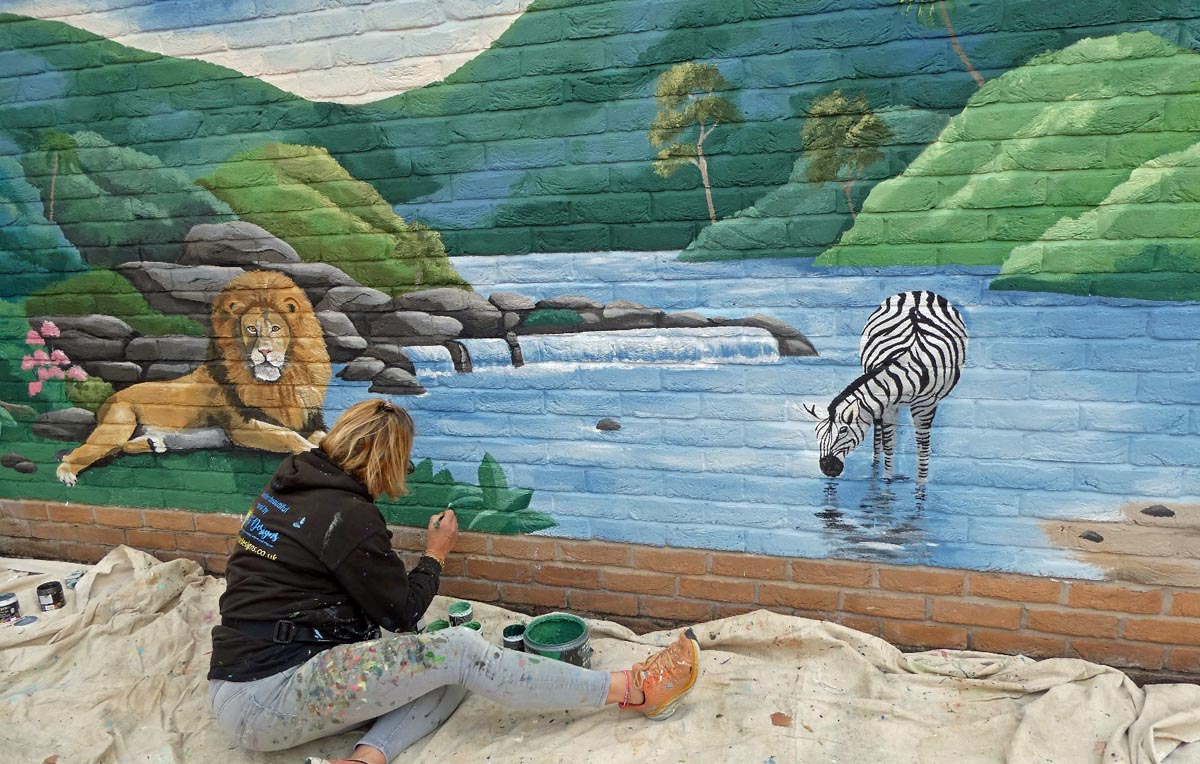
Each mural has been developed in close collaboration with patients. Their ideas, preferences, and last-minute inspirations have shaped every design — a process I value deeply. These shared moments of creativity often lead to unexpected and meaningful additions that make each mural truly personal.
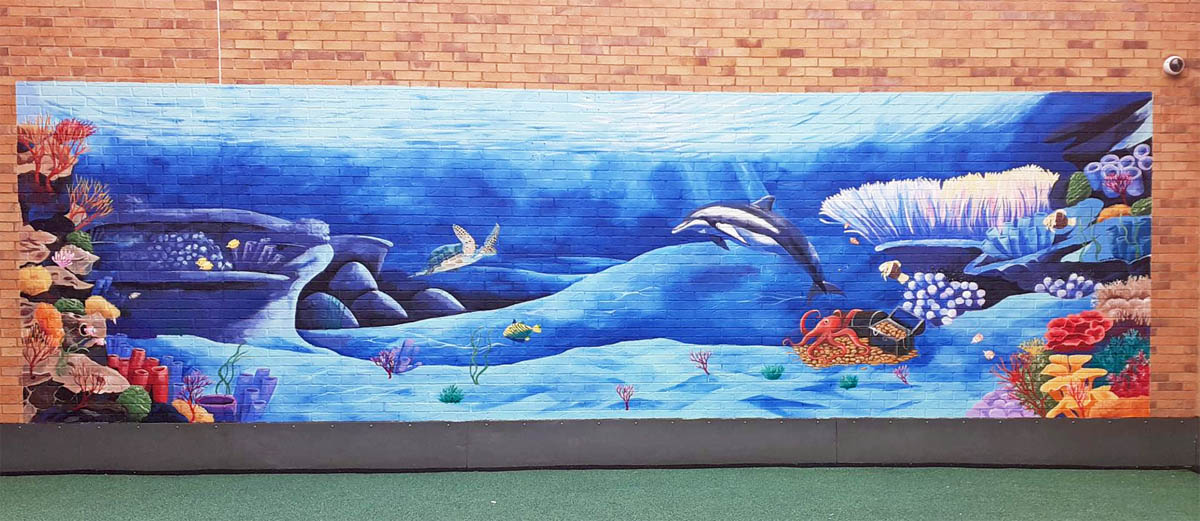
Underwater Worlds
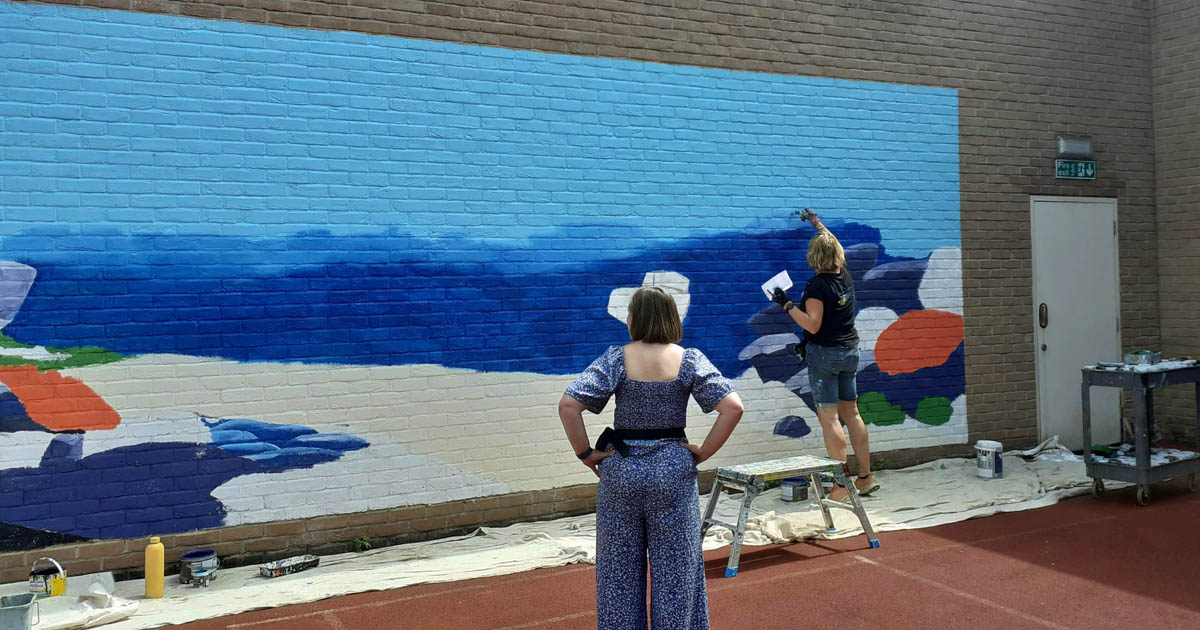
One of the early murals to be completed was an underwater scene — a theme I’d explored in a previous project. This time, the women on the ward requested different sea creatures and a fresh visual style to ensure it felt unique. They’ve since named many of the creatures featured, creating a deeper sense of ownership and connection to the space.
Roads, Rides, and Sunsets
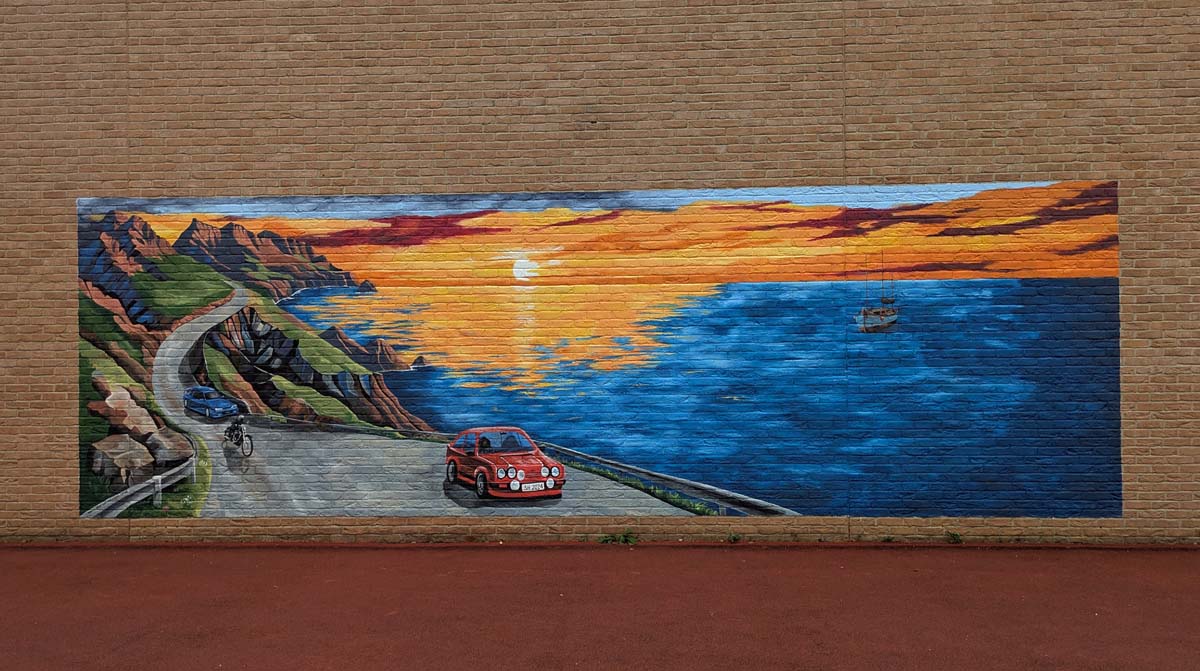
For Mackaness Ward, a male medium secure ward, the brief was clear: a winding road with the ocean on one side and mountains on the other, classic cars, and a bike cruising into the distance. I offered a few design options, and the chosen concept included a glowing sunset. The result is a warm, nostalgic landscape — a blend of freedom, memory, and aspiration that has resonated strongly with the men on the ward.
Graffiti-Style Murals
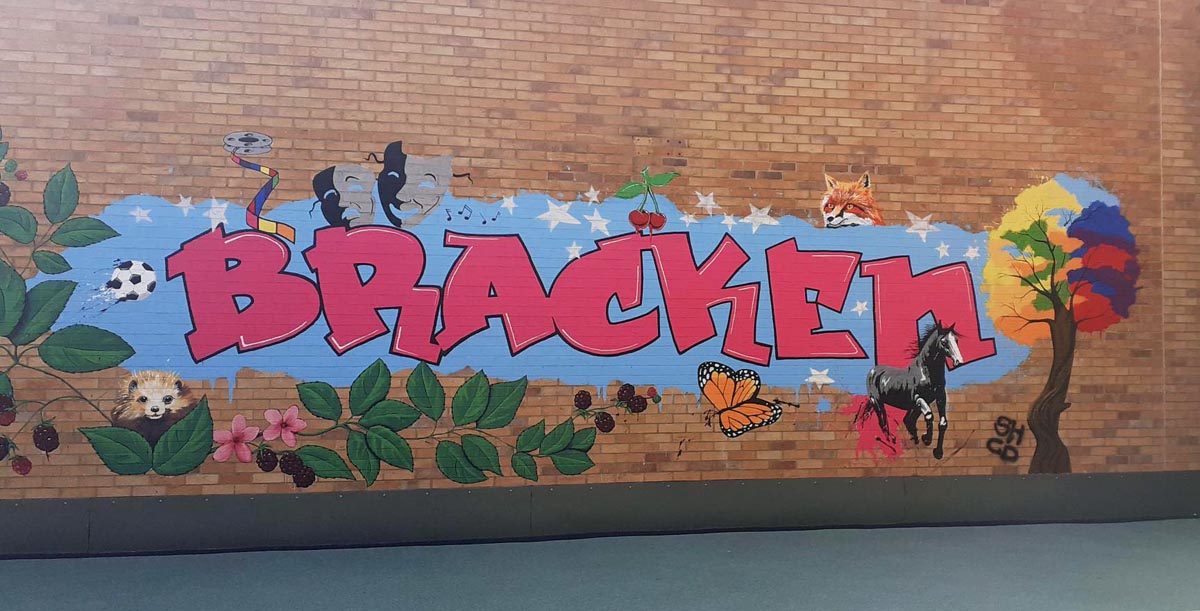
A couple of the wards chose graffiti-style murals — a vibrant, expressive approach that allowed us to include a wide range of imagery drawn directly from patient input. This style is particularly effective for capturing individual voices within a shared space, blending personal symbolism with bold colour and dynamic composition.
On Bracken ward, the women requested a mural inspired by the eclectic energy of New York subway art. They contributed a variety of images that held personal meaning — from animals and objects to abstract motifs — all arranged in a deliberately unstructured, spontaneous layout. The result is a mural that feels alive, layered, and unapologetically individual. It’s a celebration of identity, creativity, and the freedom to be seen.
On Fairbarin ward, a deaf ward for men, the patients wanted to reflect their diverse range of interests. We also included some sign language.
The deputy ward manager on Bracken said “The patients absolutely love the finished design, which includes all the things that mean the most to them. Our ladies are really proud of it.”


Every Ward is Different
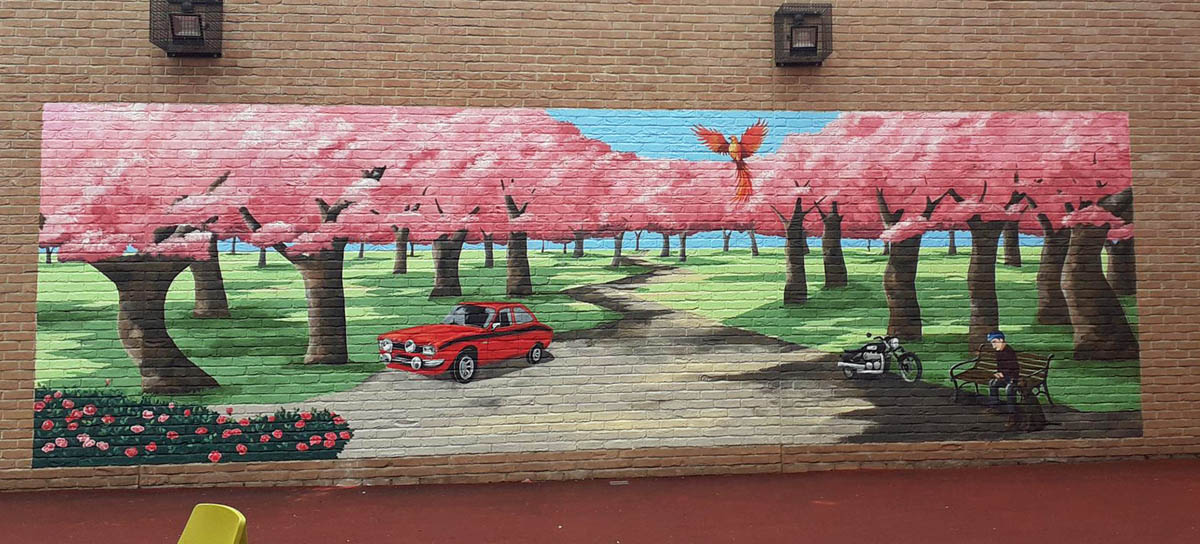
I’m often invited into early planning meetings with staff and patients, where the mural concepts begin to take shape. These sessions are rich with imagination and emotion, and they frequently result in wonderfully eclectic briefs. Rose Ward, for example, requested a mural that combined classic car and bike, blossom trees, a phoenix, a dog walker, and roses — each element deeply personal to someone on the ward. My role is to weave these disparate ideas into a cohesive visual story, ensuring that every contribution is honoured.
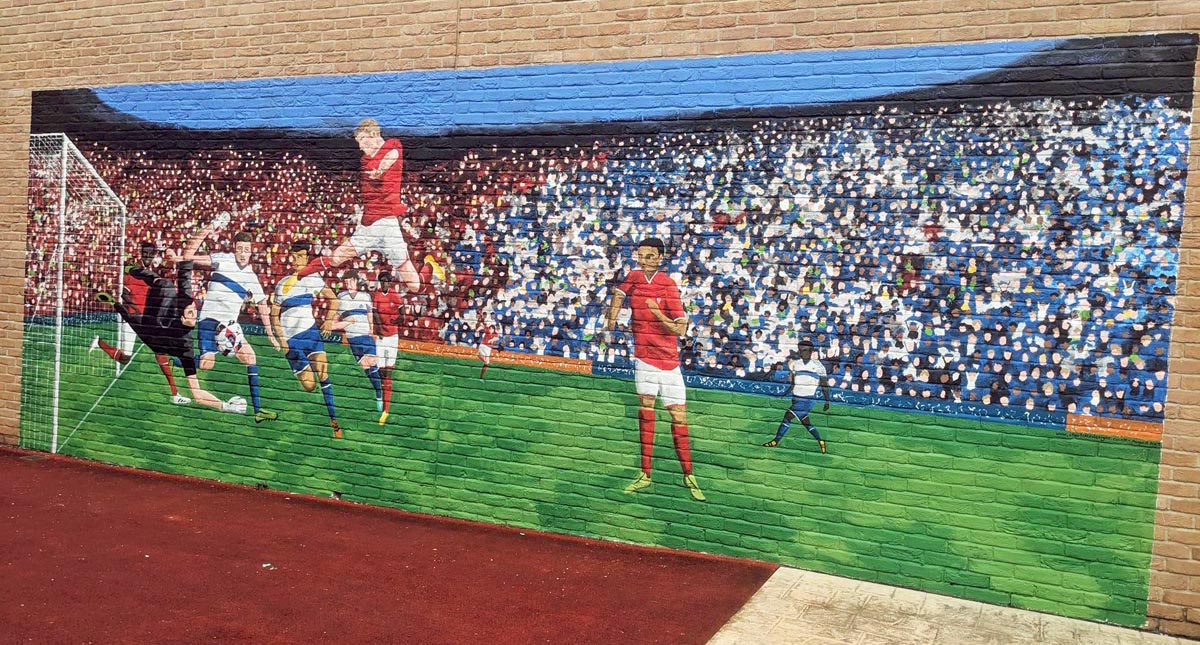
Across the board, there’s a shared desire for murals to act as windows to the outside world — a reminder of familiar places, cherished memories, and the hope of returning to them. Pritchard Ward chose a Californian beach scene, evoking warmth and freedom, while Sunley Ward asked for a football match in a packed stadium — a vibrant symbol of energy, community, and belonging.
Each mural is created under carefully managed conditions to ensure the safety and wellbeing of both patients and artist. As a MAPPA-trained practitioner, I’m familiar with the protocols required in secure and clinical environments, and I work closely with staff to ensure every stage of the process is risk-assessed and responsive to the needs of the ward. All murals are delivered within a pre-agreed budget, with designs tailored to maximise visual impact and therapeutic value. This entire initiative was originally prompted by the Care Quality Commission (CQC), who recognised the need for more stimulating and meaningful environments — a move away from blank brick walls toward spaces that offer comfort, identity, and most of all hope.
Tracy Smith from Estates and Facilities at the hospital said “We found Sarah a couple of years ago and since then she has done ten outside murals with six more planned for 2025. Sarah understands our patients complex needs and adapts to the different wards. All her work with us is co-produced with our patients, some have painted with her which has been a great experience for them and her. She has greatly enriched our environment and brought joy to our hospital.”