
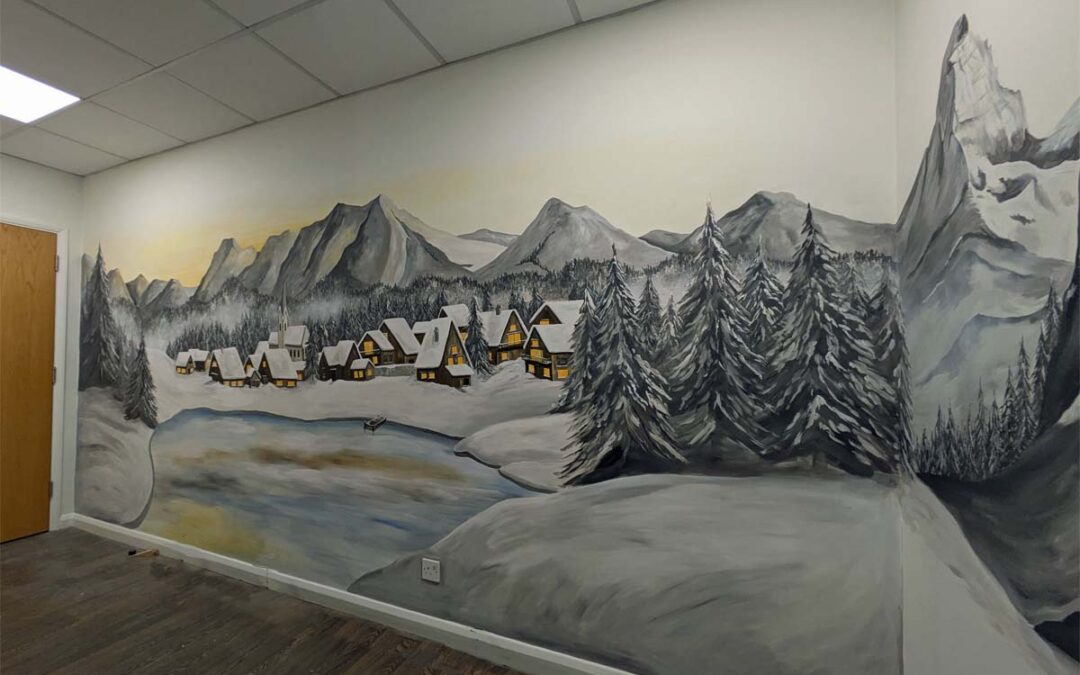
It’s no accident that so many of the world’s most successful companies are investing in murals for their interiors. Ambience has never mattered more — with everyone posting photos of where they work, eat, drink, and relax, “most Instagrammable” lists for restaurants and cafes now almost always feature a striking piece of wall art. Plain white walls simply don’t meet expectations anymore.
Large-scale wall art draws attention, and attention draws people — employees, customers, and clients alike. A custom mural gives your business a completely unique look, tailored to your exact requirements, which makes it far more memorable than generic decor. Whether you choose printed wall murals, applied like wallpaper or vinyl decals, or a hand-painted mural, the atmosphere you create should reflect your brand, your space, and your budget. Here’s how the two options compare.
Cost
If the artwork is already designed and ready to print, there’s usually little difference in price between a printed mural and a hand-painted one — cost alone isn’t a major deciding factor.
Environmental Impact
This has become a much bigger consideration for businesses in recent years, and it’s an area where painted murals clearly come out ahead. Most printed murals use plastic, plastic-coated, or plastic-backed materials that can’t be recycled and end up in landfill or worse. Paint isn’t entirely chemical-free either, but at Charlotte Designs we use only low or zero-VOC paints, along with mineral-based or vegan paint options where required — keeping air quality and environmental impact to a minimum.
Surface Suitability
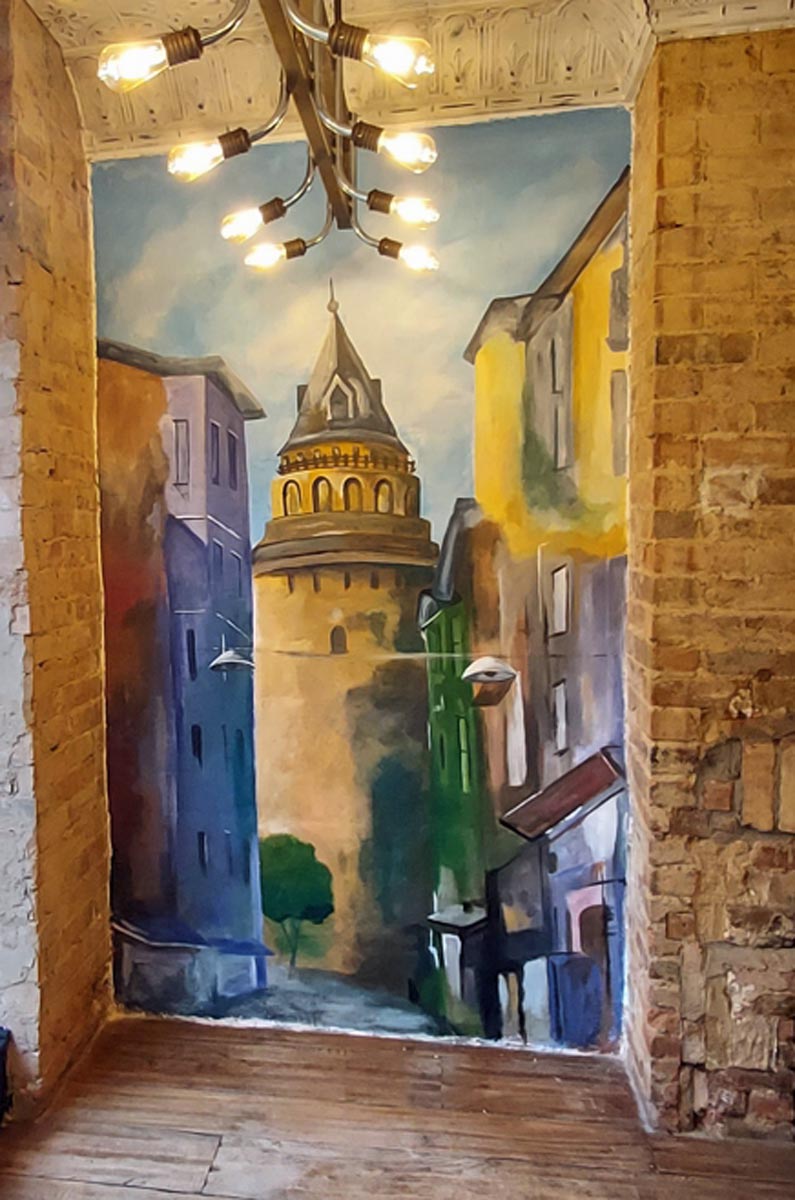
Printed murals need a flat, well-prepared surface to be applied correctly. Painted murals, on the other hand, can be applied directly to bare brick, breeze block, wood, and other uneven or textured surfaces, and can be made fully waterproof — making them a better fit for kitchens, bathrooms, and other high-moisture areas.

Longevity & Durability
In most commercial settings, printed and painted murals hold up similarly well over time, though restaurants and food businesses often avoid printed materials containing solvents. The key difference is what happens if the mural gets damaged: a printed mural typically needs to be replaced entirely, while a painted mural can simply be repaired. Many of our public-facing murals are finished with a protective topcoat, making them highly resistant to everyday wear.
Flexibility
This is where hand-painted murals have a clear advantage. Once a printed mural is produced, that’s it — if it doesn’t quite fit the space, or plans change, you’re starting from scratch. Painted murals, by contrast, can be adjusted right up until the final brushstroke. We’ve reworked layouts, added or removed elements, and even changed entire color schemes mid-project without any issue.
Timescale
The design process is similar for both, but the production process differs. Printing timelines depend on supplier availability, while a large hand-painted mural naturally takes longer to complete on-site. If speed is your top priority, printed murals generally offer a quicker turnaround.
Overall Look and Feel
Ultimately, the deciding factor is usually how it looks and feels in the space. Printed murals offer perfect, repeatable consistency — useful if you need the exact same design across multiple sites. Painted murals, on the other hand, give you a genuine, one-of-a-kind piece of original art. No two are ever quite the same, and nothing else captures that authentic, hand-crafted feel.
Whether you’re after photorealistic detail or a bold original design your customers can walk right into, a well-executed mural is one of the most effective ways to create a memorable, on-brand commercial space — and to make sure it’s remembered long after the visit ends.
To find out more about our commercial mural work in restaurants, spas, offices and warehouses, take a look at our Business Mural page